
PRO Measures Resources
Patient-reported outcome data is powerful. There are many validated PRO surveys, and selecting the correct measures to use is key to success. Choosing PRO measures is no easy task, but we’ve got you covered. We highlight the good, the bad, and the nuances associated with the most commonly used PRO tools.
PRO Measures Guides
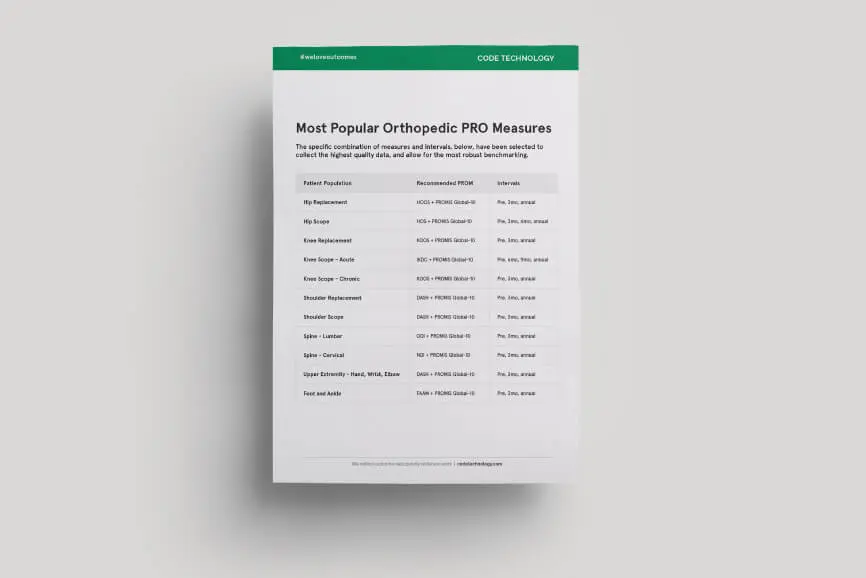
Most Popular Orthopedic PRO Measures

Guide: Spine Patient-Reported Outcome Measures

Guide: Shoulder and Upper Extremity Patient-Reported Outcome Measures

Guide: Popular Pediatric PRO Tools Download

Guide: Knee Patient-Reported Outcome Measures

Guide: Hip Patient-Reported Outcome Measures

Guide: Global Health Patient-Reported Outcome Measures

Guide: Foot and Ankle Patient-Reported Outcome Measures
PRO Measures Blog Posts

THA/TKA PRO-PM and the TEAM Composite Quality Score: How the Measure Is Scored and What It Means for Your Hospital

PROMs in the EHR: Hidden Costs of Managing Patient-Reported Outcome Measures in Epic and Other EHRs

Why Orthopedic Practices Should Start Reporting THA/TKA PROMs Now (Before CMS Makes It Mandatory for Outpatients)

Introduction to CTM-3: What It Measures and Why

Understanding the Psychiatric Inpatient Experience (PIX) Survey for CMS Reporting

CollaboRATE Measure: Shared Decision Making

Short Form-12 (SF-12): Assessing Patient Quality of Life Efficiently

Toronto Extremity Salvage Score (TESS): Comprehensive Guide to Assessment & Scoring

Understanding the Pediatric IKDC (Pedi-IKDC) Knee Evaluation Tool

Discover the Pedi-ASES, an Adaptation of the Validated ASES

Parsley Symptom Index (PSI): e-PROM Tool for Telehealth Symptom Assessment

Understanding the Olerud-Molander Ankle Score (OMAS)
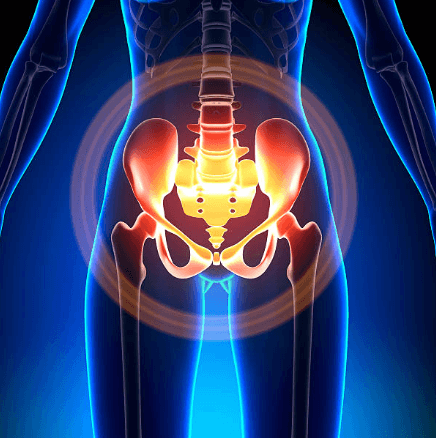
Majeed Pelvic Score: Assessing Pelvic Fracture Outcomes

KCCQ: Enhancing Heart Failure Care & Quality of Life

PROMIS Global Health Versions
PROMIS Global Health Overview The PROMIS Global Health is an overall evaluation of an adult (ages 18+) patient’s physical and mental health. The measure is generic rather than disease-specific and looks at a patient’s general health. There is only a fixed-length version consisting of 10 questions and is available at healthmeasures.net. All versions of the PROMIS Global Health produces a Global Physical Health (GPH) and Global Mental Health (GMH) scoring component. There is not an overall PROMIS Global Health score. PROMIS also has shorter measures that will provide the GPH and GMH scores: Global Mental 2a and Global Physical 2a.…
Schedule A Call With a PRO Expert!
Need more help with your PRO related questions? CODE can help! Schedule a call with a CODE expert today to get you on your way to better harnessing your patient reported outcomes.